On Trying Again
The email came while I was tutoring. It started with "Thank you," which felt like a bad sign. I skimmed to the end of the sentence anyway, and it finished with "congratulations." I read the whole thing again, slowly, to make sure I hadn't misread it.
That was February this year.
I first applied to Cambridge in 2024. Didn't get in. Honestly, Cambridge hadn't really been a dream school up until that point. It felt too far removed from anything I could picture for myself. A kid with a 2.89 GPA in his first year of middle school doesn't exactly grow up with Oxbridge on his radar. In a way, that distance made it easier to apply. There was no weight attached to it. I was just seeing if it was possible.
It wasn't. Not then.
When my IB results came out the following July, the first thought I had, before anything practical, was that I wanted to try again. But I didn't do anything about it for a month. Didn't study, didn't plan. Just sat with the idea and let it settle.
What eventually moved me wasn't a decision so much as a conversation.
I'd met a friend that summer who was studying Engineering at Oxford. We were on the phone late one night, and she was talking about his own admissions process. She said, in that easy, unguarded way that some people have, that she'd worked hard and she was glad she did. No hedging, no false modesty. Just an honest account of her own effort.
I remember finding it striking. Not the achievement itself, but the way she talked about it. Like it was simply true, and there was nothing uncomfortable about saying so. I asked myself whether I could say the same about my own preparation the first time around. I couldn't. That bothered me more than the rejection had.
So I made the call. I turned down my offer from Imperial, which I had already accepted, and waited on a Seoul National University result that was still pending. From the outside it probably looked like an unnecessary gamble. The people around me thought so too, for the most part. My parents, to their credit, said if that's what I wanted to do, then do it.
I think if I'm being honest, my natural tendency is to hold onto what I already have. To tell myself that the certain thing is probably fine, maybe even better. I'd done that before, more times than I'd like to admit. It kept me comfortable and it kept me exactly where I was.
The difference this time was wanting to be able to say, to someone, without any qualification: I prepared properly. I didn't leave anything on the table. Whatever the result.
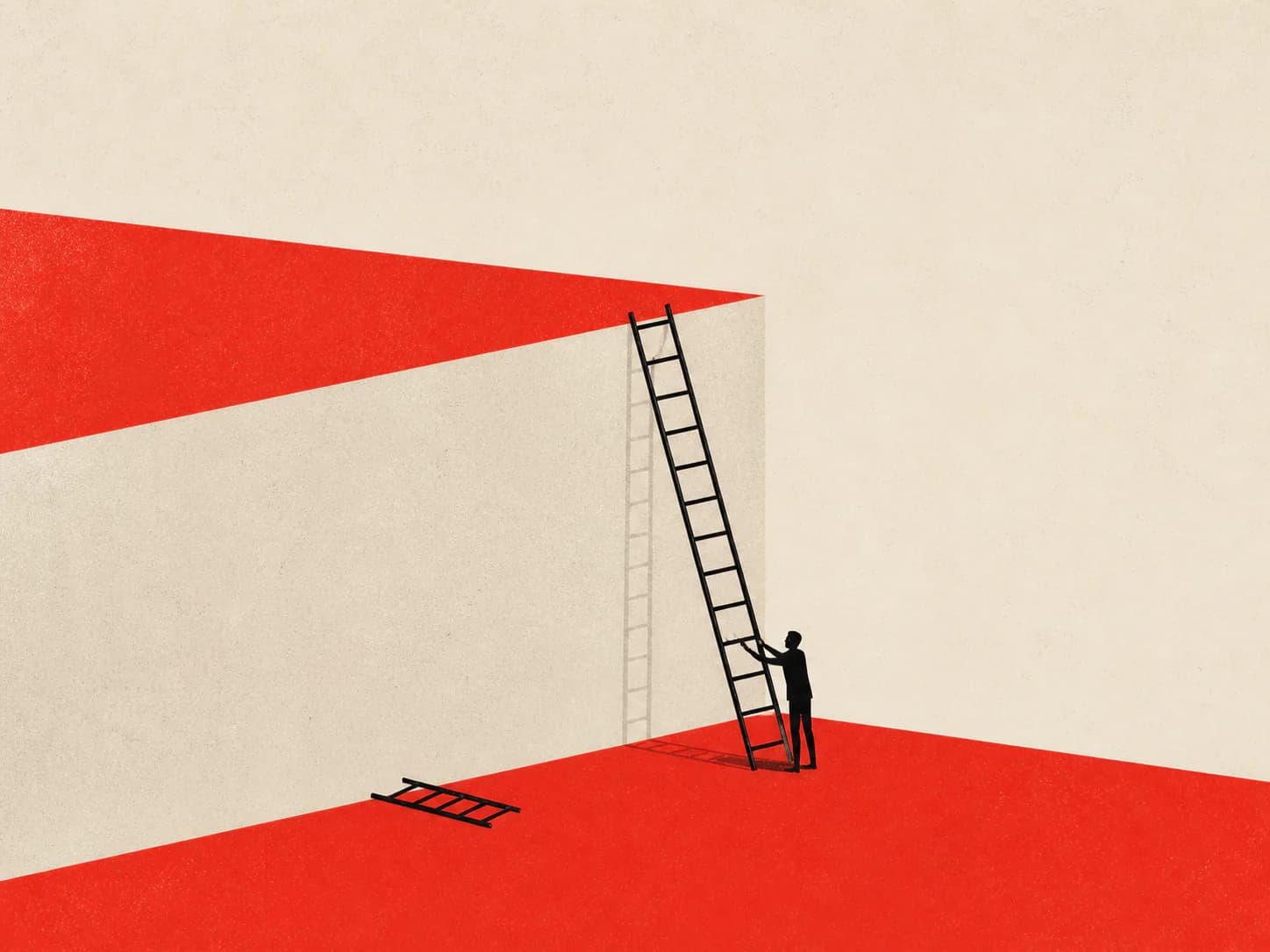
Looking back now, the offer feels smaller than the preparation did. I don't mean that as ingratitude. It's more that the wall, once you're past it, always looks lower than it did when you were standing in front of it. What stays with you isn't the getting over it. It's the period before, when you were deciding whether to try at all.
I don't think the outcome is really the point. What you build in the process, the honesty about where you're falling short, the choice to go back and do it properly rather than settle, that's what actually stays. The offer is just confirmation that it worked.
I'd rather give credit to the people around me than to myself. I got lucky in a lot of ways. The right conversation at the right time. People who didn't try to talk me out of it. A friend who said something offhand that happened to land. None of that was earned. It just happened.
Not everyone gets that. Most people don't.
That's the part that stayed with me long after the offer came. The preparation, the process, the exam itself — those things I could understand and reconstruct. But the moments that actually moved me were things I had no control over. And I kept thinking about the students who were just as capable, just as willing to put in the work, but never had a version of that phone call. Never had someone in their corner who had actually been through it.
That's what Lab45 is, at its core. Not a platform. An attempt to be that thing for people who didn't get it by chance. I hope we could be the source of 'luck' to everyone who's reading this.